Understanding the expectation of linear combinations is crucial in the field of probability and statistics. This section is dedicated to exploring the concept of the expectation of linear combinations of random variables, a fundamental aspect of probability distributions and their practical applications.
Understanding the Linearity of Expectation
- Basic Concept: The average value a random variable is expected to take.
- Linearity Principle: The expected value of a sum is the sum of the expected values, even if the variables are not independent.
Formulas for Expectation
- Single Variable:
- Two Variables:
Applications in Distributions
- Normal Distribution: Linear combinations of normal variables are normally distributed.
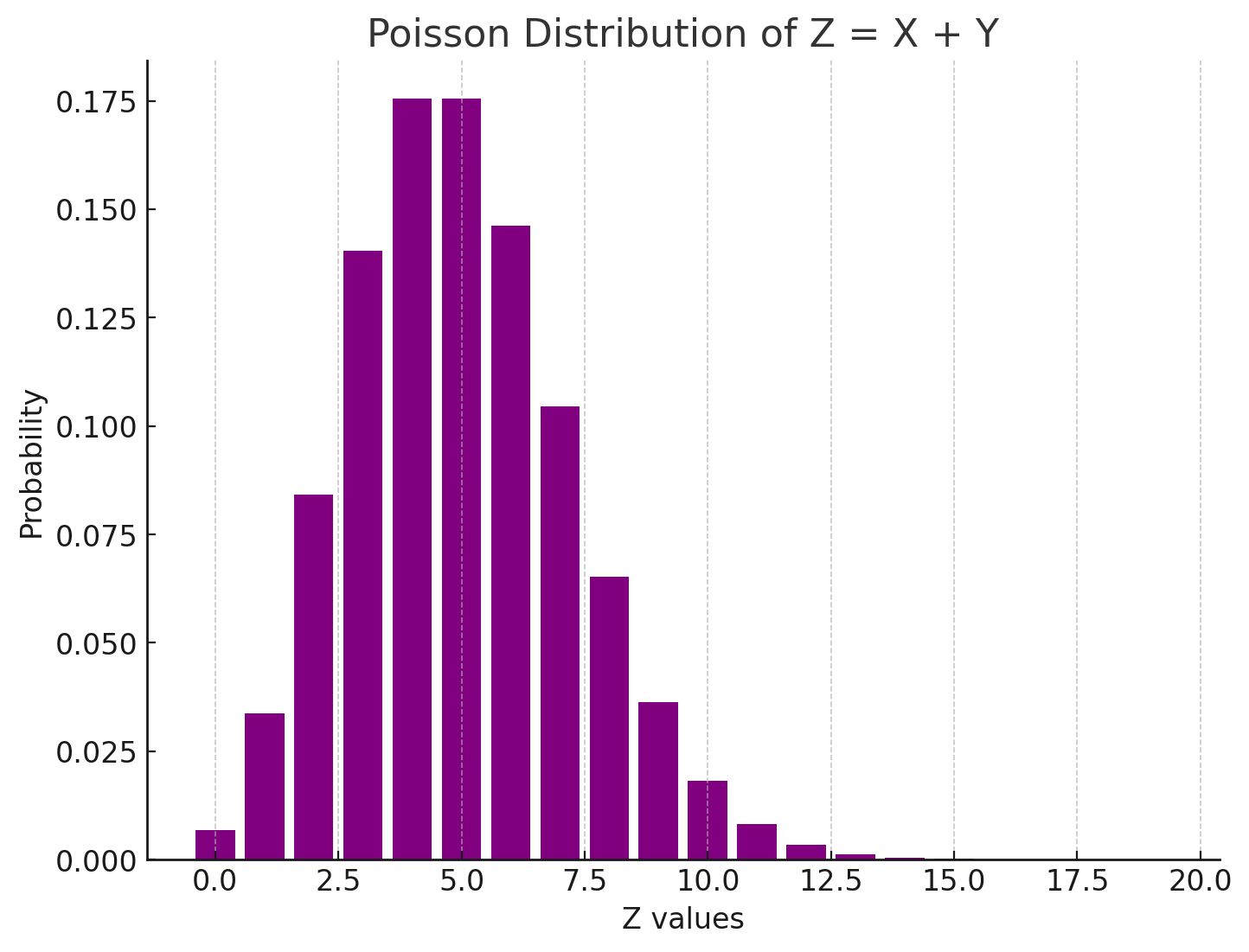
- Poisson Distribution: The sum of independent Poisson variables is Poisson distributed.
Example Problems
Example 1: Single Variable
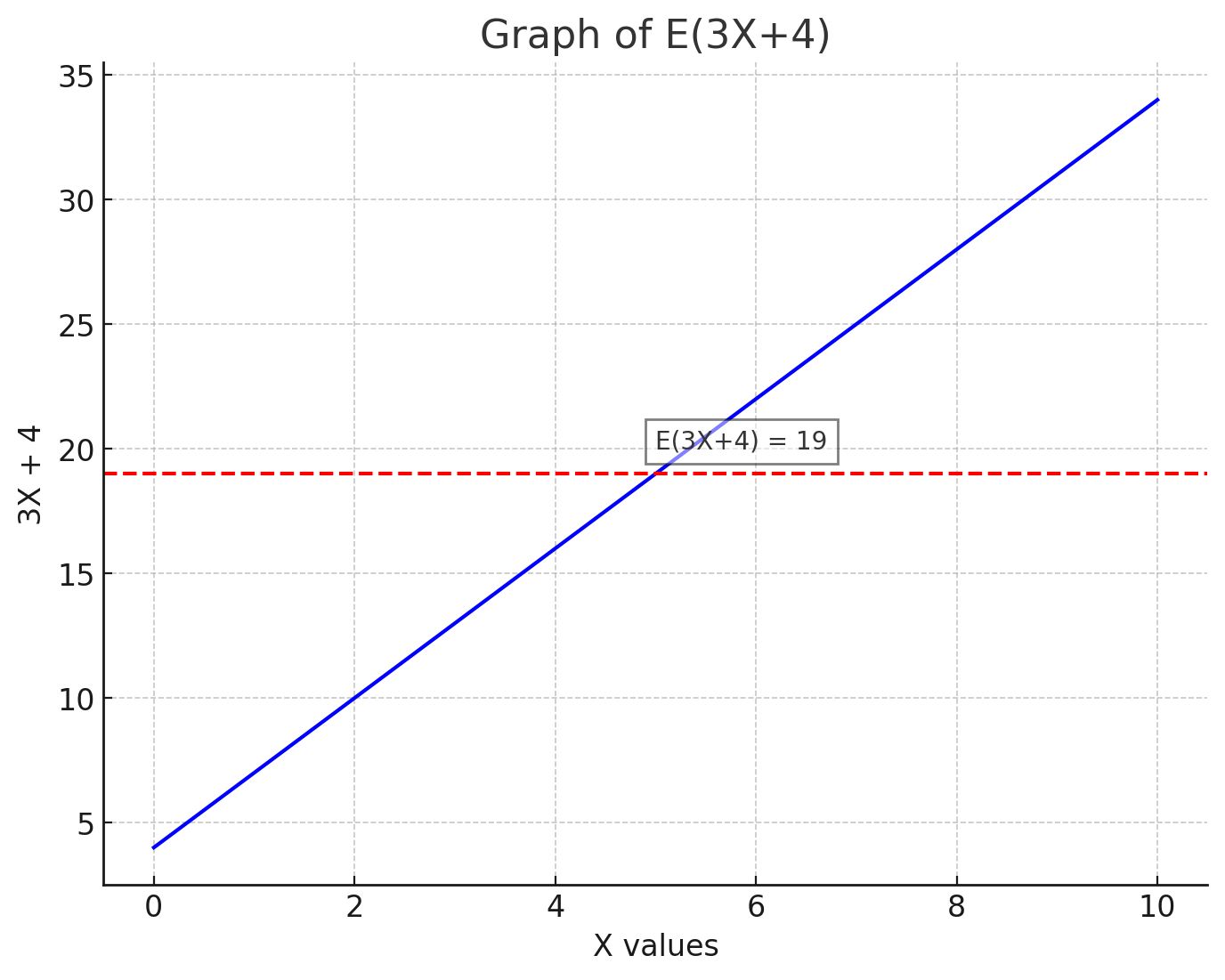
Determine the expected value of the expression , given that the expected value of is .
Given:
Solution:
Graph: Illustration of .
Example 2: Two Independent Variables
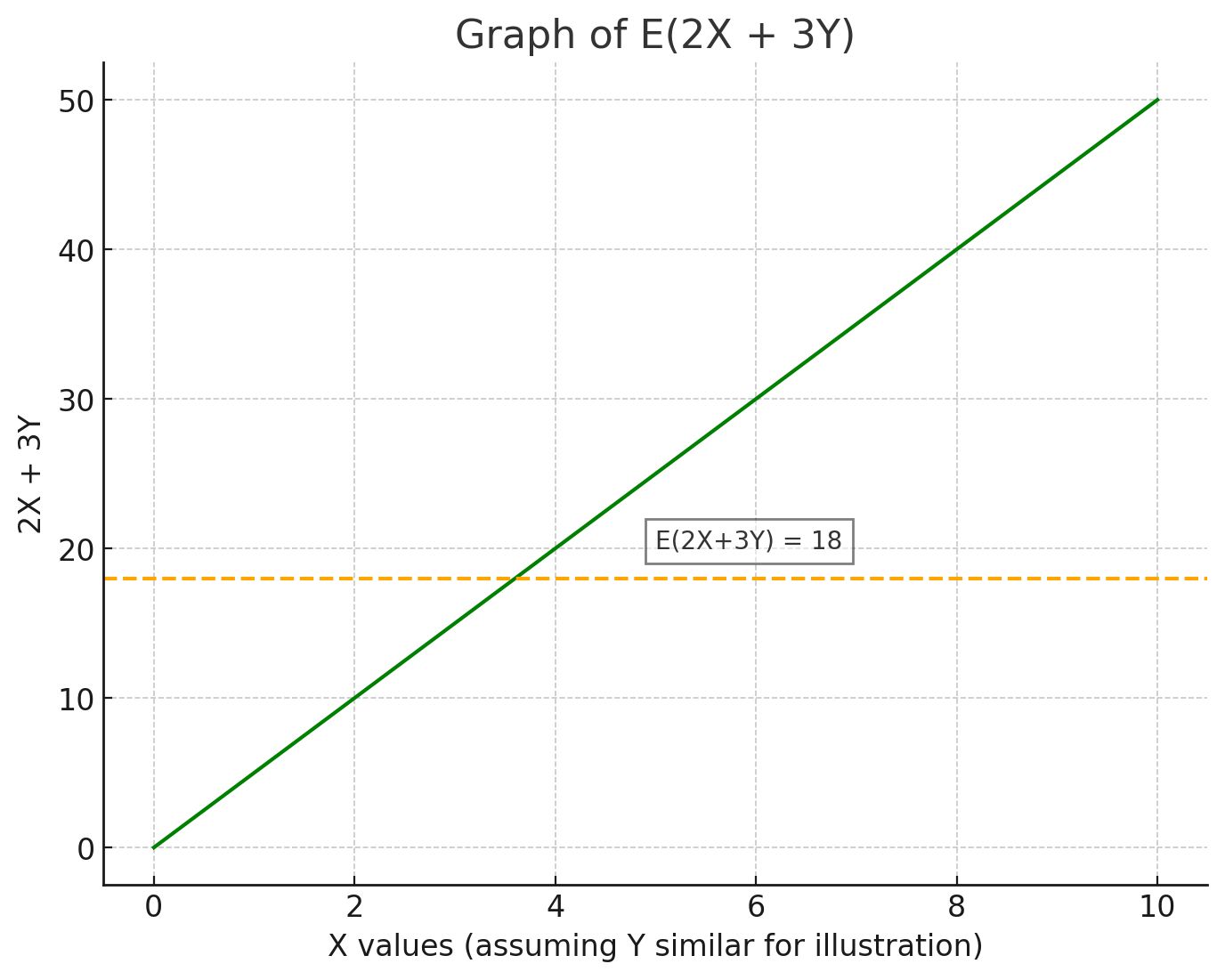
Calculate the expected value of , where and are independent variables with expected values of and , respectively.
Given:
Solution:
Graph: Illustration of .
Example 3: Poisson Distribution
Find the distribution of the sum , where is the sum of two independent Poisson processes and with rates and .
Given: Poisson processes and with rates and
Solution:
Graph: Poisson distribution for .