AQA Syllabus focus:
'Factors affecting the accuracy of eyewitness testimony, including post-event discussion and anxiety.'
Eyewitness testimony can be distorted after the event or during it. Two important factors are post-event discussion between witnesses and anxiety, both of which can change what is later recalled.
Witness communication after the event
Post-event discussion happens when witnesses talk to each other after seeing a crime or accident. This can reduce accuracy because memory is not a perfect recording. Recall can be changed by later information.
Post-event discussion: Communication between witnesses after an event that may alter an individual’s memory of what happened.
A major problem is co-witness contamination, where one witness includes details supplied by another witness. As a result, the witness may later report those details as if they were personally seen.
One explanation is memory conformity. This means a person’s recall becomes similar to another witness’s recall after discussion. Two forms of social influence help explain this:
Normative social influence: the witness agrees with the other person to avoid conflict, embarrassment, or disapproval.
Informational social influence: the witness accepts the other person’s version because they believe it is more accurate than their own memory.
Informational social influence is especially likely when:
the event happened quickly
visibility was poor
the witness is uncertain
the other witness seems more confident
Research support comes from Gabbert et al. Participants watched the same crime from different viewpoints. Some then discussed what they had seen. Many later recalled details that they had not actually witnessed themselves but could only have learned from the other person. This shows that discussion can introduce inaccurate information into memory.
This research is useful because it has clear practical applications. Police should:
separate witnesses as soon as possible
take individual statements quickly
avoid giving witnesses opportunities to compare accounts
However, much of the evidence on post-event discussion comes from controlled studies. These are useful because they show cause and effect, but they may not capture the pressure, confusion, and emotional intensity of real crimes. Even so, the basic finding remains important: witnesses can influence each other without meaning to.
Emotional arousal during the event
Another factor affecting eyewitness testimony is anxiety. Crimes often create fear, stress, and physiological arousal, which can influence attention and later recall.
Anxiety: A state of emotional and physical arousal, often involving fear or stress, that may affect attention, encoding, and recall.
One view is that high anxiety reduces accuracy. When a witness feels threatened, attention may narrow and focus on the source of danger rather than on other details. This is often called the weapon focus effect.
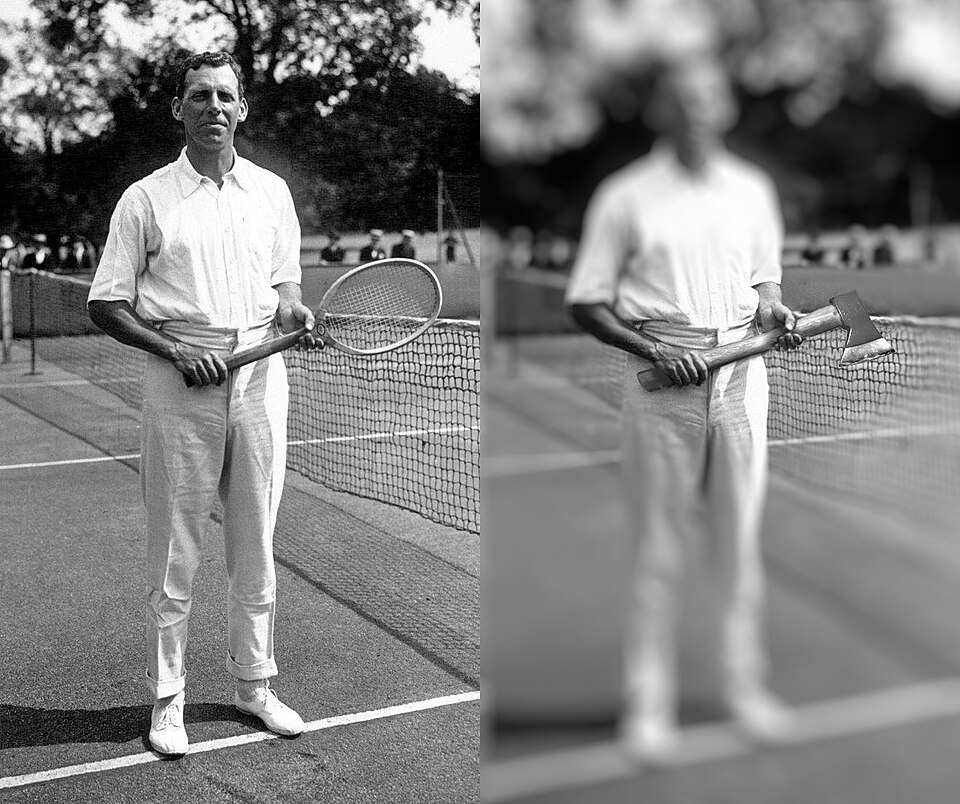
This diagram illustrates the weapon focus effect: when an unusual or threatening object is present, visual attention is pulled toward that object. As attention becomes concentrated on the weapon-like item, fewer cognitive resources are available to encode other details (e.g., the person’s face or clothing), which can reduce later identification accuracy. Source
For example, if a weapon is present, the witness may remember the weapon clearly but be less accurate about the attacker’s face, clothing, or movements.
Support for this comes from Johnson and Scott. Participants were more likely to make an inaccurate identification when they had seen a man carrying a knife than when they had seen a man holding a pen. This suggests that anxiety or threat can disrupt identification accuracy.
A strength of this explanation is that it fits what is known about limited attentional capacity. A witness cannot attend equally to every detail in a stressful situation. If attention is drawn strongly to one central feature, other features may not be encoded well.
However, anxiety does not always reduce accuracy. Yuille and Cutshall studied real witnesses to a shooting and found that their recall was very accurate even several months later. Some of the most anxious witnesses gave especially detailed accounts. This suggests that anxiety in real-life situations can sometimes enhance memory, especially for important central details.
This difference between findings may be explained by the type of study used. Laboratory studies often involve lower levels of stress than real crimes, even when participants are surprised. Real witnesses may experience stronger emotion, greater personal relevance, and more serious consequences, which can strengthen memory for the main event.
There is also evidence from Deffenbacher et al., whose review found that high levels of stress generally reduced eyewitness accuracy. This supports the idea that severe anxiety is more harmful than helpful. Overall, the relationship between anxiety and accuracy appears to be complex rather than simple.
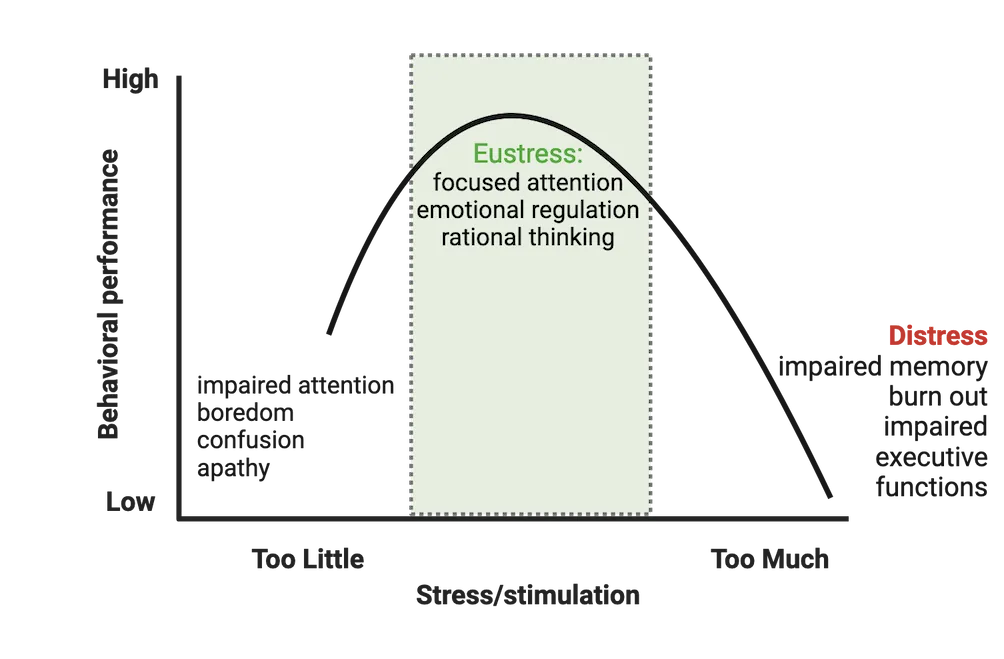
This figure shows the classic inverted-U relationship between stress (arousal) and performance. It visualizes why anxiety findings can be mixed: moderate arousal can sharpen attention and support performance, whereas very low or very high arousal is associated with poorer cognitive functioning (including memory and executive control). Source
Why findings on anxiety are mixed
Mixed findings do not mean the research is weak; they suggest that anxiety affects different kinds of memory in different ways.
A useful distinction is between:
central details, such as the weapon or the main action
peripheral details, such as background objects or less important features
Anxiety may improve memory for central details because they are highly relevant to survival. At the same time, it may reduce memory for peripheral details because attention becomes selective.
This helps explain why one witness may accurately describe the threatening action but be poor at identifying the suspect. It also shows why psychologists should be careful about making broad claims such as “anxiety always harms memory” or “anxiety always improves memory.”
The most balanced view is that:
post-event discussion usually lowers accuracy by introducing social influence and misleading details
anxiety can either impair or strengthen eyewitness testimony depending on what is being remembered and the conditions under which the event was experienced
These factors are highly important in legal settings because juries may assume that confident witnesses are accurate, even when later discussion or extreme stress has altered what they remember.
Practice Questions
Explain one way post-event discussion can affect the accuracy of eyewitness testimony. (2 marks)
1 mark for identifying that witnesses may be influenced by each other after the event.
1 mark for explaining that this can lead to inaccurate recall, such as adopting details they did not actually see themselves or showing memory conformity.
Discuss anxiety as a factor affecting the accuracy of eyewitness testimony. Refer to research in your answer. (6 marks)
1 mark for identifying that anxiety can affect eyewitness accuracy.
1 mark for explaining that anxiety may reduce accuracy by narrowing attention or causing weapon focus.
1 mark for relevant research support, such as Johnson and Scott or Deffenbacher et al.
1 mark for explaining that some research suggests anxiety can improve recall for important details, such as Yuille and Cutshall.
1 mark for evaluation of the evidence, for example differences between lab and real-life studies.
1 mark for a clear conclusion that anxiety has a mixed or complex effect on eyewitness testimony.
FAQ
Talking with another witness can make a memory feel more complete and coherent.
If both witnesses agree on a detail, that agreement may be mistaken for proof. Repetition also increases familiarity, and familiar information often feels true.
As a result, confidence can rise even when the detail originally came from someone else rather than direct perception.
Source monitoring is the process of deciding where a memory came from.
After a discussion, a witness may remember a detail but forget its source. They may confuse:
what they actually saw
what another witness said
what they later imagined
This source confusion can make borrowed details feel like genuine personal memories.
A longer delay gives witnesses more time to:
talk to each other
think about the event repeatedly
mix original memories with later information
As the original memory trace becomes less accessible, outside information may have a stronger influence.
This means delayed interviewing can increase the risk that witnesses report reconstructed memories rather than untouched recall.
Stress hormones such as adrenaline and cortisol can have different effects depending on timing.
During or immediately after an event, arousal may strengthen the encoding of highly important information.
But if stress remains very high during later recall, it can interfere with retrieval by making concentration harder and increasing mental overload.
So the same biological stress response may sometimes help formation of memory but hinder access to it later.
They can be, although vulnerability varies with age and situation.
Children may be more likely to:
trust another person’s account
assume adults or peers are correct
have difficulty separating their own memory from outside information
This does not mean child witnesses are always unreliable. It means interview procedures need to reduce co-witness contact and encourage independent recall as early as possible.