Differential equations play an integral role in the realm of calculus, offering profound insights into various scientific fields such as physics and engineering. This section of Mathematics focuses on the techniques for translating statements about rates of change into differential equations, incorporating constants of proportionality, and illustrating these concepts through real-life examples.
Techniques for Formulating Differential Equations
Translating real-world situations or mathematical statements into differential equations involves several steps:
Steps in Formulation
1. Identify the Variables: Ascertain the changing variables and how they are interrelated.
2. Establish the Rate of Change: Understand the relationship between the rate of change of one variable and another.
3. Introduce Constants of Proportionality: Apply constants to represent proportional relationships.
4. Formulate the Equation: Synthesize these elements into a coherent differential equation.
Real-Life Examples
Example 1: Population Growth
Scenario: The population of rabbits grows in proportion to its current size.
- Variables: denotes the population at time .
- Rate of Change: is proportional to .
- Proportionality Constant: represents the constant of proportionality.
- Differential Equation: .
Solution: The general solution is , where is an arbitrary constant.
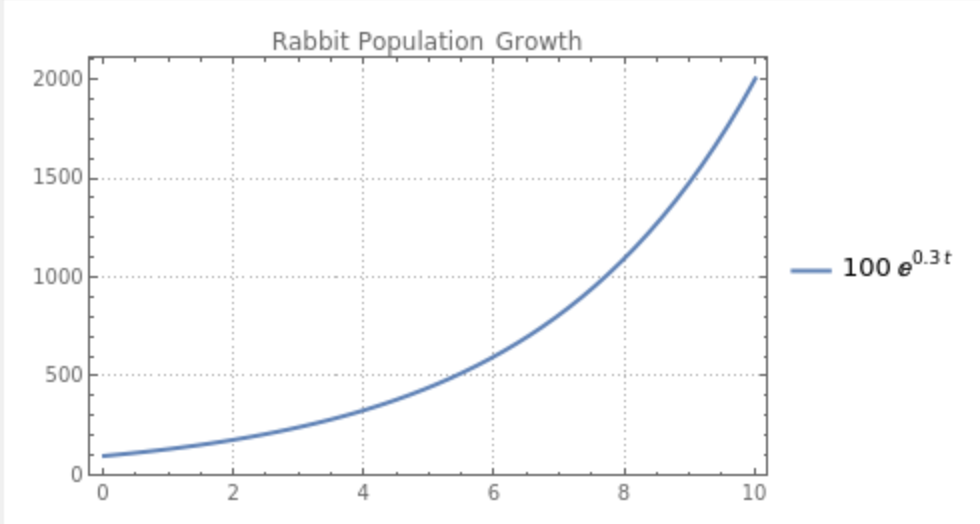
This exemplifies exponential growth, commonly used in biology for populations without limiting factors.
Example 2: Cooling of a Hot Object
Scenario: A hot object's cooling rate is proportional to the temperature difference between it and the room temperature.
- Variables: is the temperature of the object at time , is the room temperature.
- Rate of Change: is proportional to
- Proportionality Constant: is the constant of proportionality.
- Differential Equation: .
Solution: The general solution is , where is an arbitrary constant.
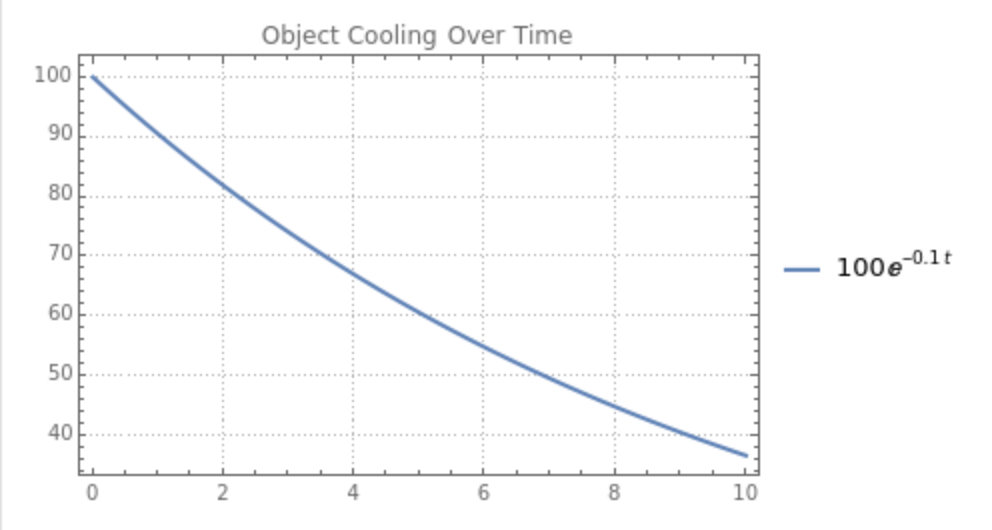
This illustrates Newton's Law of Cooling, explaining the cooling process of objects.